Impulse buying occurs when people make sudden, unplanned purchases. In consumer psychology, this behaviour is often linked to impulsive personality traits. When visiting a store, it is easy to see how various techniques are used to influence what people buy. This thesis examines how visual cues, like colours and visual clutter, affect impulse buying and how these cues interact with a person's impulsiveness.
HMKW Berlin, Master's thesis
April 2023
Prof. Dr. Jan-Henning Raff,
Department of Design.
Prof. Dr. Volker Thoma,
Department of Psychology.
Understanding Impulse Buying
Consumers describe external “forces” that influence them to buy impulsively (Rook, 1987).
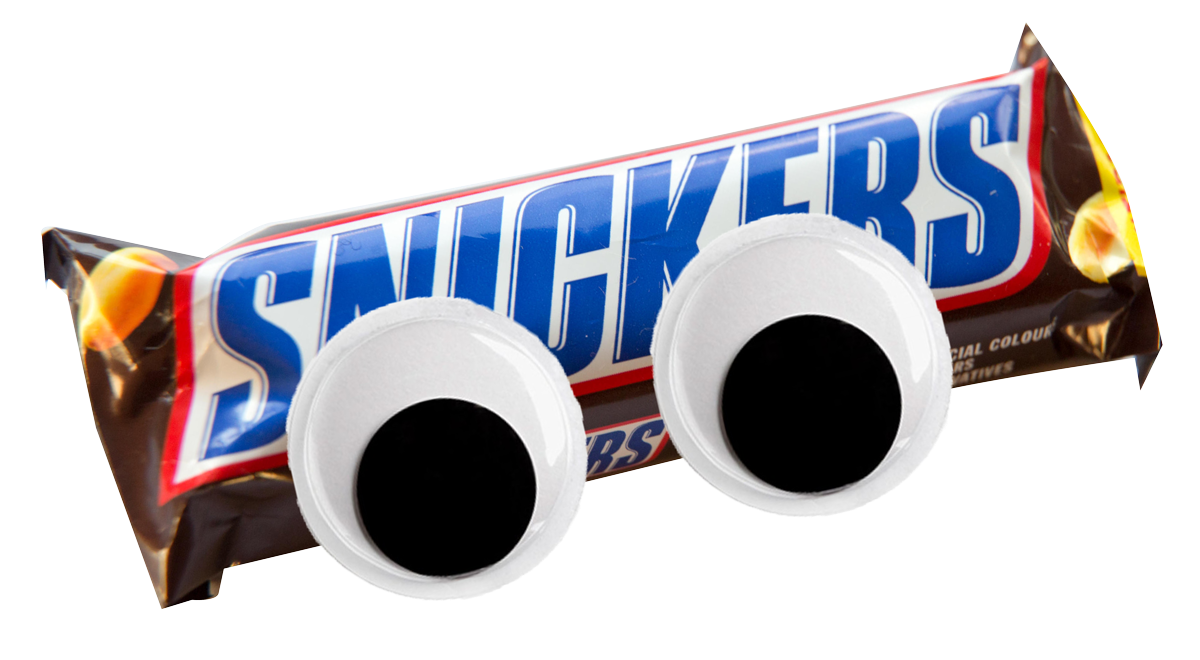
“I was standing in the grocery store checkout line, and the candy bar was staring there at me.”
Interviewee in Rook's 1987 study.

Whereas psychologists focus on impulsive personality traits as the main explanation (Mandolfo et al., 2021).
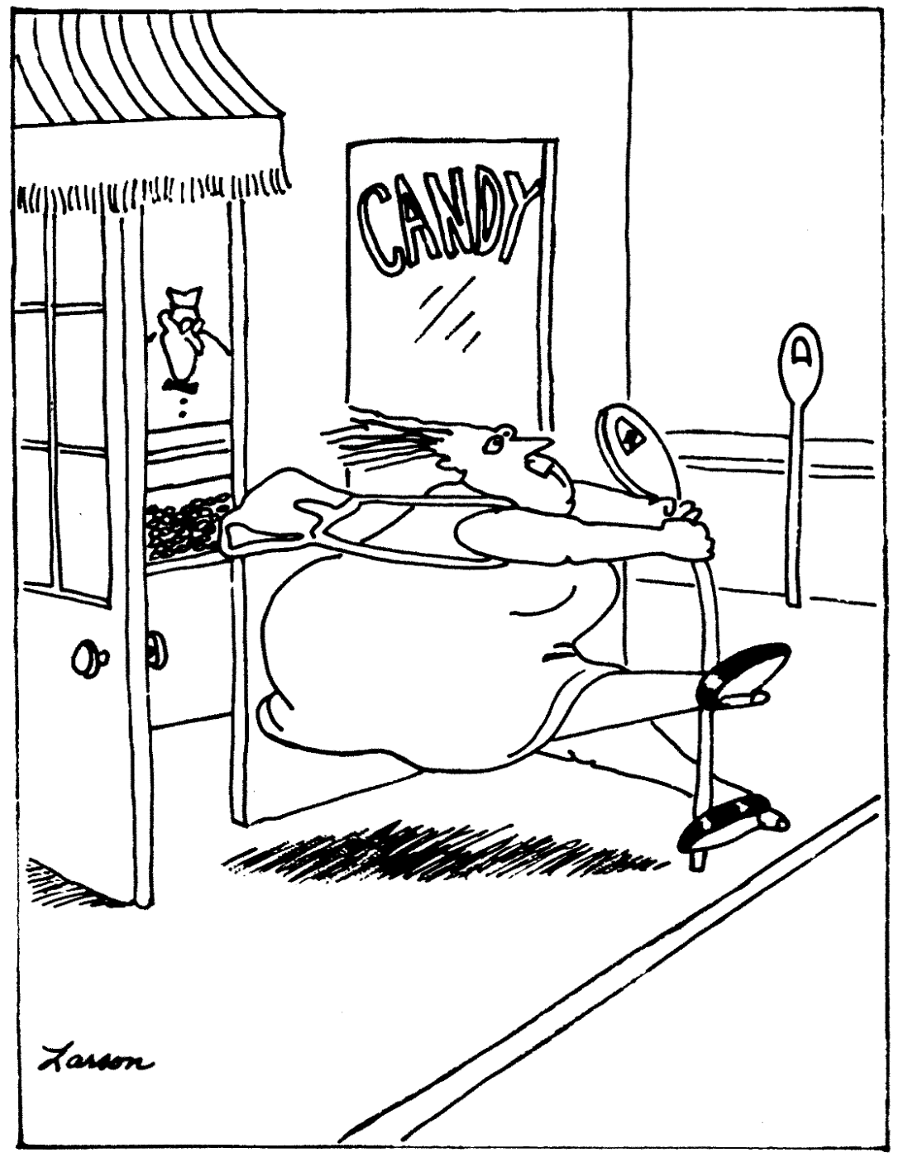
“The Far Side” cartoon by Gary Larson. Chronicle Features, San Francisco, CA. (1987)
Retail designer Victor Gruen transformed passersby into impulsive consumers by using light and space to dramatically stage products in storefronts (Hardwick, 2015).

“A good storefront tries to make his step as easy as possible for him and tries not to let him even notice that he takes such an important step.“
Victor Gruen (1941)
Overstimulation has been found to weaken behavioural regulation (Muraven et al., 1998).
The Gruen Effect describes a store that is so overwhelming that consumers are persuaded into consuming “mindlessly” (Hardwick, 2015).
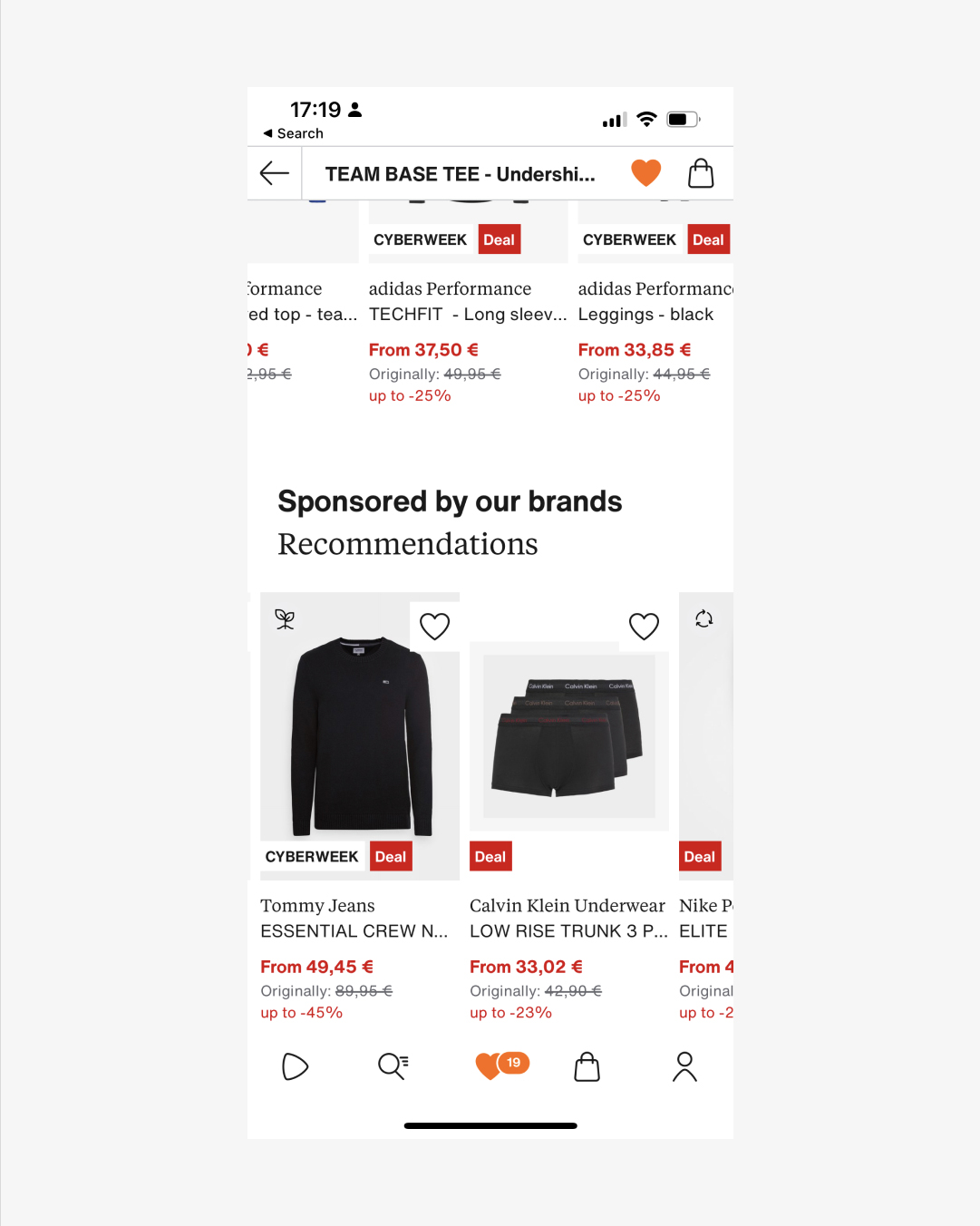
Screenshot from the Zalando app with high visual clutter.
Visual clutter increases extraneous cognitive load (NN/g, 2013), and might also lead to overstimulation.
Hypothesis: High visual clutter will cause consumers to buy impulsively.
Creating Impulse Buying
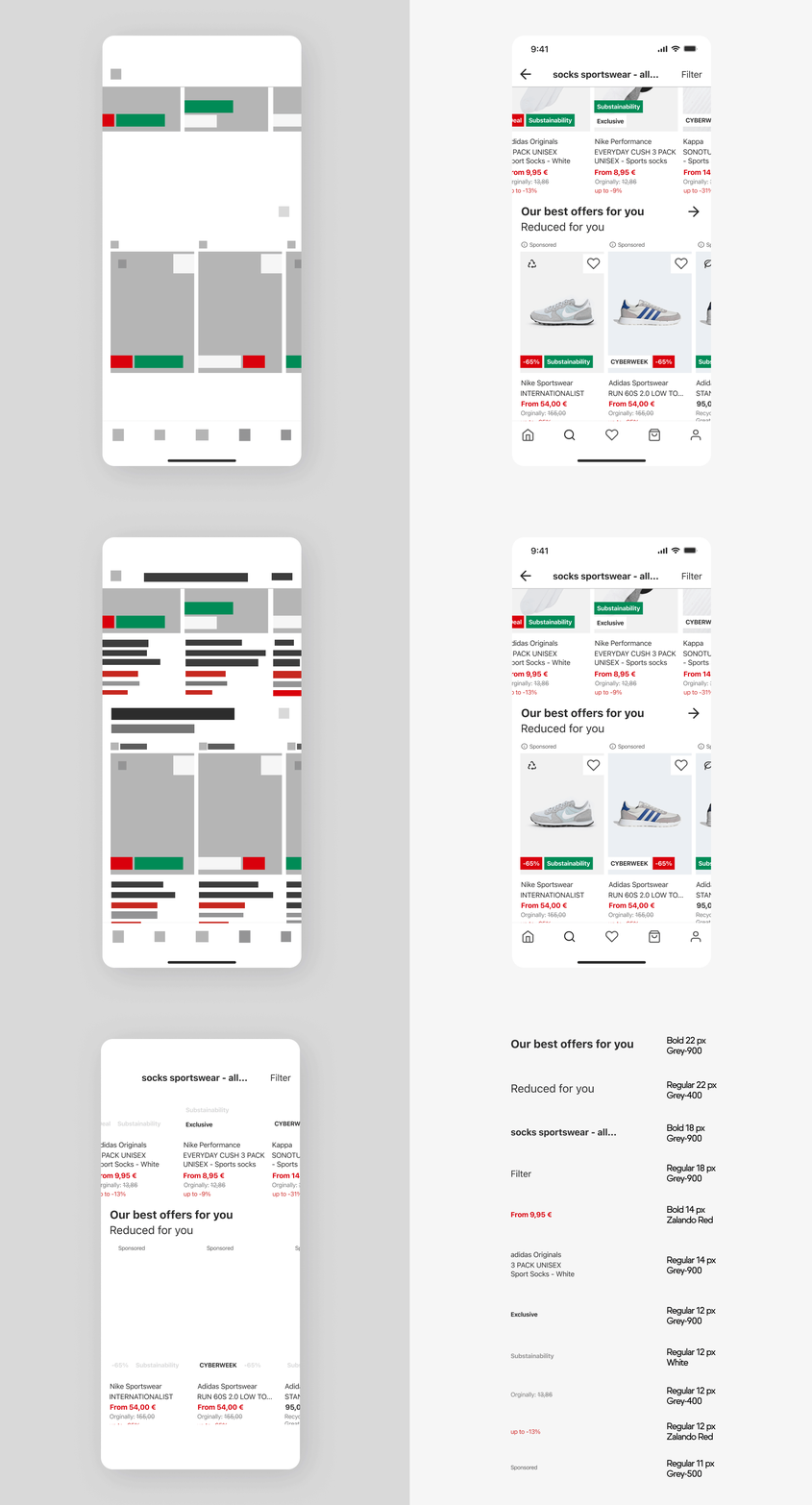
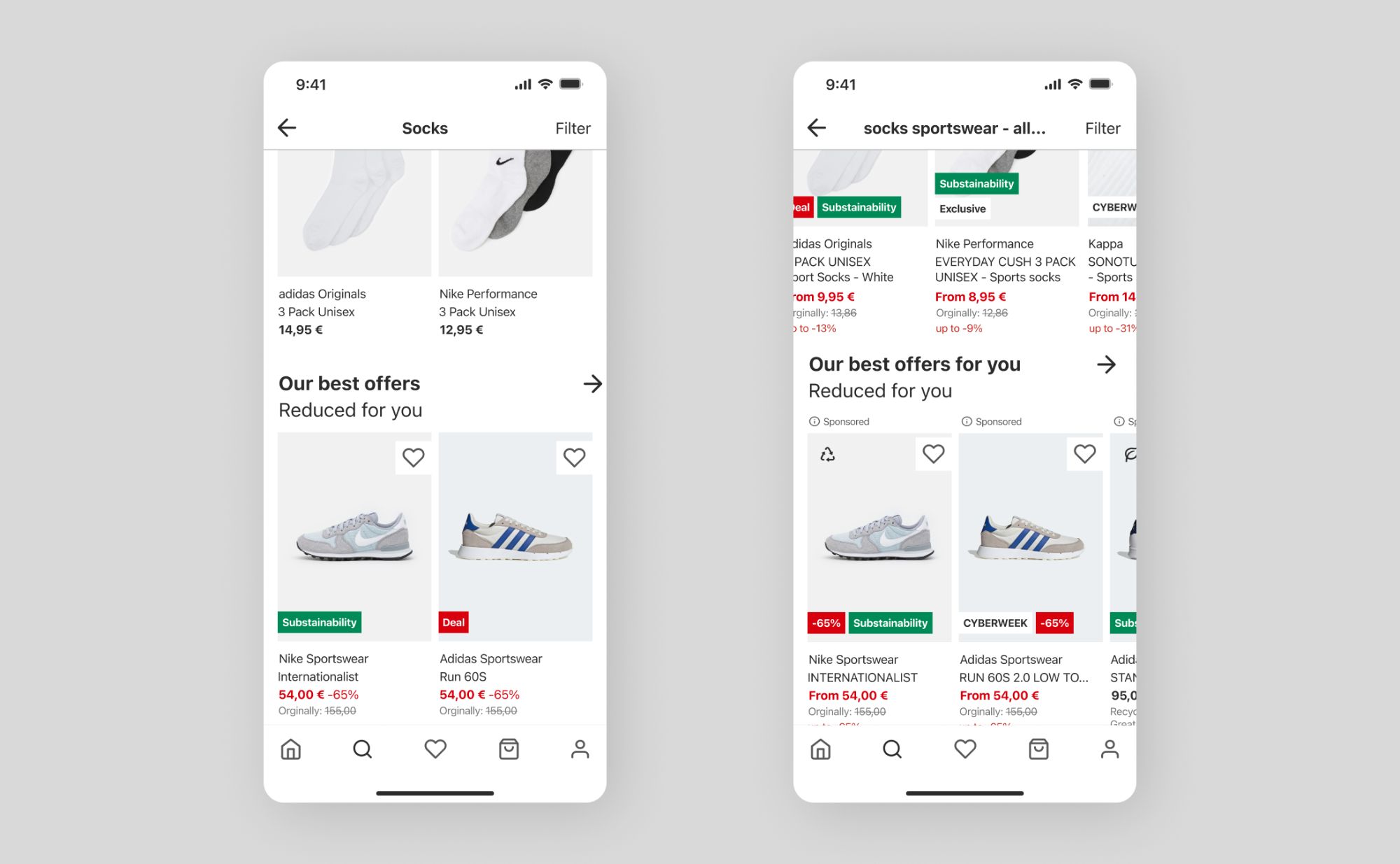
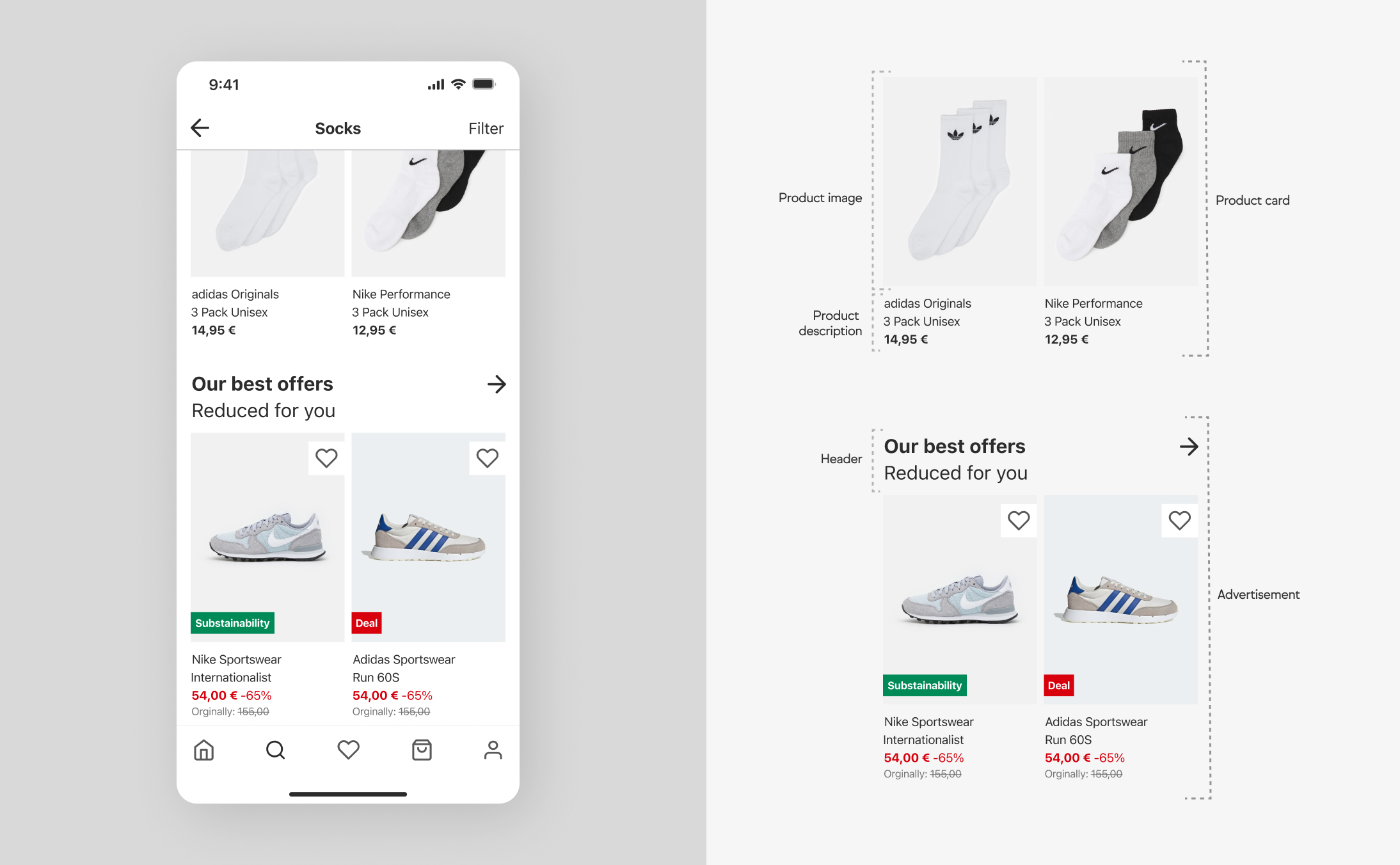
Low information load due to Gestalt laws of grouping and whole forms.
High information load due to increased use of badges, unfinished forms, text cuts, inconsistency in colour coding, increased use of text and typographical scales, deconstructed hierarchy, and enforced algebra.
A timed test showed that the high visual clutter prototype (on the right) significantly increased comprehension time by an additional 14 seconds on average.
Testing Impulse Buying
106 participants: 45% women / 55% men / 0% diverse / Average age: 43 years. The general impulsiveness of the participants was assessed using the BIS-Brief Scale (Patton et al., 1995; Stanford et al., 2009).
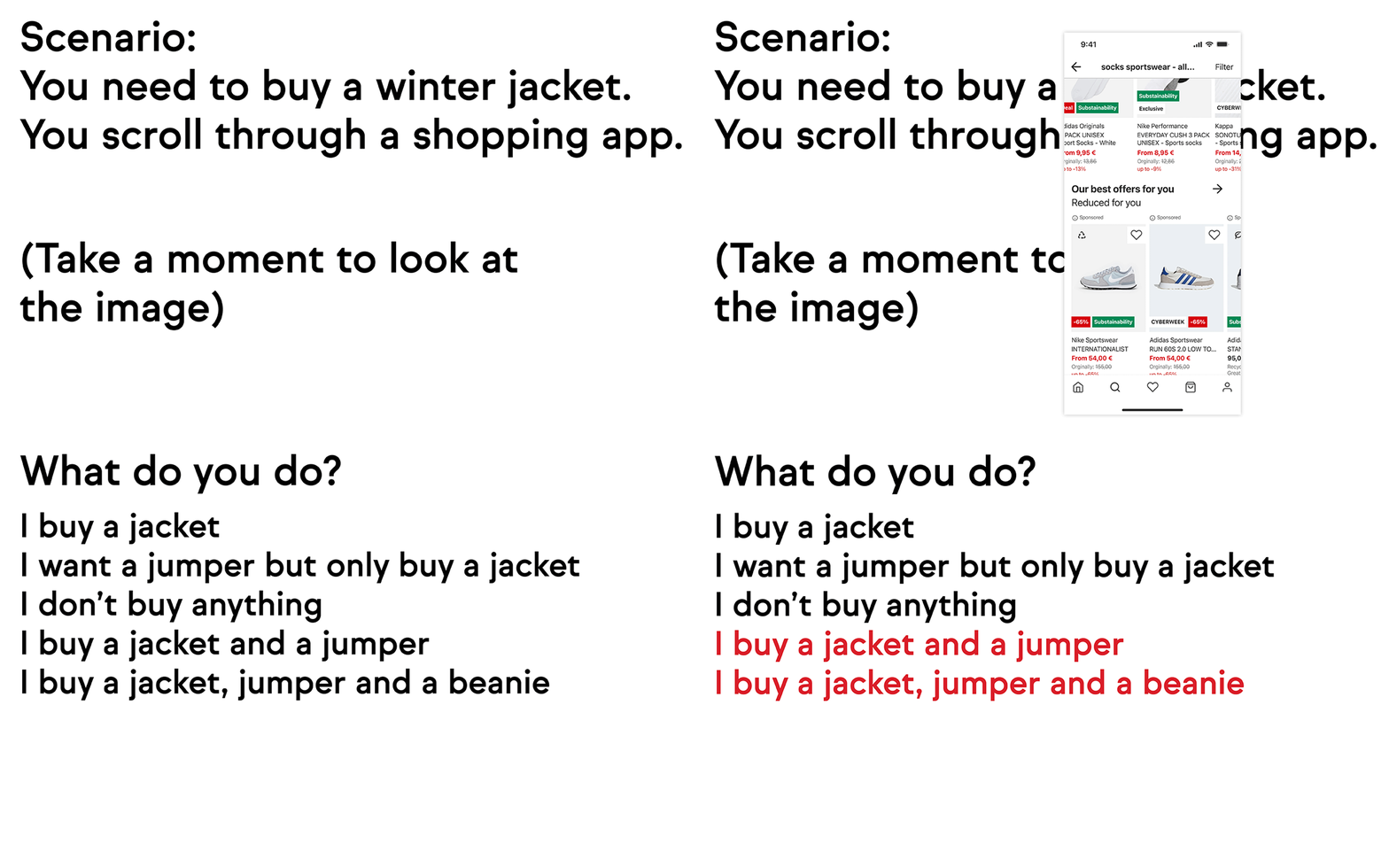
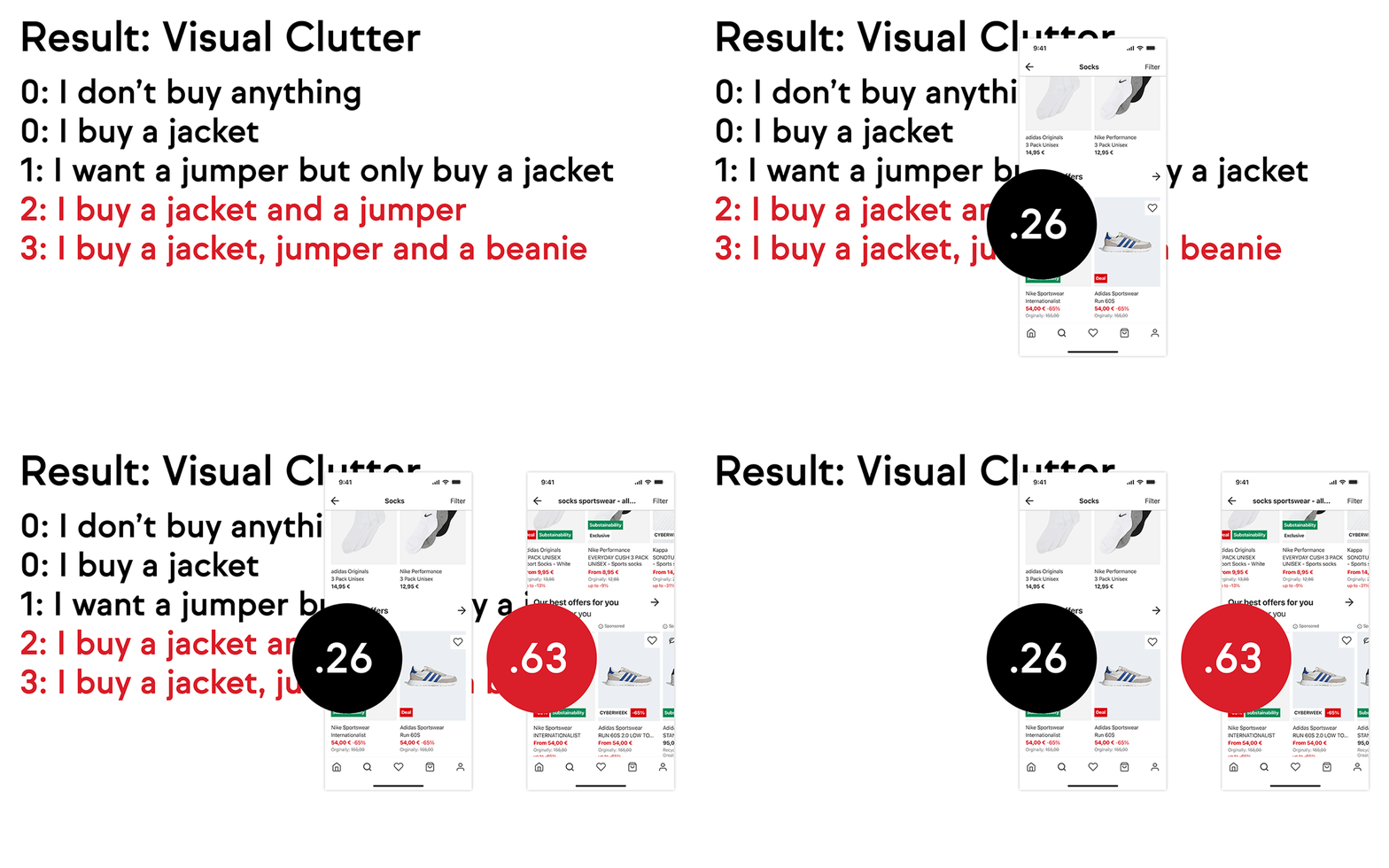
Participants were shown either a prototype with high or low visual clutter and asked to make a buying decision. Additionally, they were measured on impulsive personality traits.
A one-way ANOVA was conducted to examine the difference in participants' impulsive buying choices (dependent variable) between the two treatments (independent variable). The result was close to, but not below, the threshold for statistical significance, F(1, 44) = 3.9, p = .06 (alpha = .05). Male participants chose non-impulsive buying options across all conditions.
The hypothesis was not supported: high visual clutter did not significantly increase impulsive buying choices. The clearest signal was among women, who chose more impulsive options with the high visual clutter prototype, but the difference was not statistically significant. Highly impulsive women did not choose more impulsive options than low-impulsive women, which hints that the shopping situation may matter more than personality. This remains a tentative pattern for future research, not a finding.